I don't think I have ever been asked 'what my book is about' so many times in one week as I have whilst reading this unassuming, rather slim novel by Jessica Francis Kane. Perhaps it's the ambiguous title that has got people's tongues wagging but I have subsequently been greeted with a rather uncomfortable silence when I explain the terribly tragic event that this 'report' focuses on.
On March 3rd, 1943, 173 people (including 62 children) were crushed to death whilst making their way down into Bethnal Green tube station to shelter from the bombers that had all but destroyed the east end of London by the end of the war. It was the single largest loss of civilian life caused by a 'non military incident' during WWII, and still the largest to date on the London Underground. The question on everyone's lips (and certainly on Book Snob's - who drew my attention not only to this book, but the entire incident itself) is, why the gubbins do none of us know about this!? Of course, I'm sure Grandma, and even Mummy and Daddy Relish are aware of this disaster, but why did no-one think to mention it whilst we trawled through textbooks in history class at school?
This is a perfect example of how far removed younger people are becoming from significant events in history like this one. Yes, the avid readers among us may happen to stumble upon such enlightening books, but the reality is that many don't and I find it desperately sad that my bright, well-educated friends walk down these tube steps every single day and, unless they happen to take a fleeting glance at the small commemorative plaque that was so very belatedly tacked to the side of the station, they would have no idea of the tragedy that took place under their feet a mere 68 years ago...
I feel like a bit of a miserable sod reading about such a sad event at such a festive time but I honestly only picked this up out of shock at my complete ignorance and a burning desire to learn.....not sheer morbidity I assure you. Kane has very cleverly created a fictional account, not only of the event itself, but the inquiry following the event and the report put together by magistrate Laurence Dunn that attempted to make some sense of this freak accident.
Did the strange noise created by a new model of anti-aircraft missile coupled with the rumour of an impending attack set to rival the one that destroyed Berlin panic the crowd into pushing and creating a crush akin to that seen at Hillsborough in 1989? Or did the rising tensions with the local populace and the recent influx of immigrants, particularly Jews, have any connection with the disaster?
The ins and outs are thus explored, (along with a little creative license from our author with regards to the specifics) but I have to admit that, although it was a very harrowing yet thoroughly interesting read, it does seem a bit of a random choice of first novel for a woman who was born and grew up in the U.S. It leaves me wondering whether she has a personal relationship with the event or whether she just made a discovery and had a burning story to tell.
This book was all in all a very informative account of a very harrowing time for eastenders. It can be a little distant to the individual human stories at times but I suppose that's all in keeping with 'The Report' approach. A sad, intriguing, though clearly not a very festive read!
18 December 2011
8 December 2011
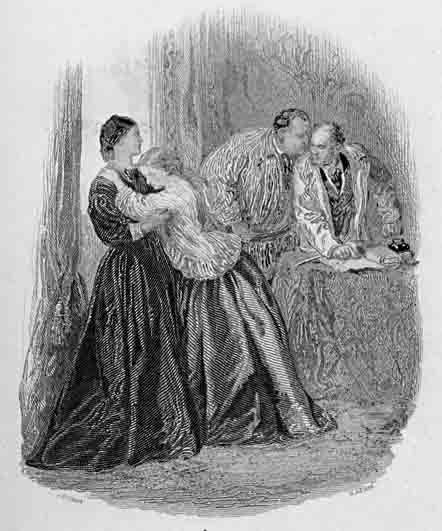
The Woman in White
I love this book. In fact, I would almost go as far to say that this book saved me from the gale force shock of a gloomy, grey November and the meh feeling induced by the not-so-amazing 1Q84. How happy I am with myself for favouring the classic! Perhaps I'm not such a heathen after all...
I'd always heard great things about Wilkie Collins and just never got around to him so I took a punt on a dull looking copy sat in a charity shop a couple of months ago and, as with a fair few books I've read this year, am sooo embarrassed it's taken me so long to get here.
As with many books from this period, it does take a few pages to relax into the wordy, melodramatic prose, but once you do (and it only took me about 3 pages) this superbly old-fashioned mystery novel - considered to be the first of its kind - is absolutely marvellous.
One dark night, following news that he will be moving to Cumberland to take up a post as the drawing master to two wealthy young women, Walter Hartwright chances by a rather strange and frightened young woman on his way into London; dressed, rather unusually, all in white. She is on her way to a safe house in the city and Walter, naturally wanting to help the young damsel in distress bundles her into a taxi and away into the night.
It transpires that this spectre of a woman is Ann Catherick who, as well as recognising the name of the fine house in Cumberland where Hartwright will be spending the next few months, is also an escapee from a nearby asylum who the artist has unwittingly helped escape. The memory of this mysterious encounter remains in the man's mind as he installs a place for himself at Limmeridge House, where he fosters a great friendship with (and love for) his students; the indomitable Marian Halcombe and her very sweet, very lovely sister Laura. Walter and Laura's blossoming romance is doomed from the very beginning, with the artist's sweetheart engaged to an exceedingly wealthy and extremely shady gentleman; Sir Percival Glyde, an arrangement that soon turns sour for all involved...
I will stop here with the narrative for fear of delving too far into the great threats, dramas and mysteries that quickly unravel and threaten our heroines from here on out. I actually missed my bus stop twice whilst reading this book on the way to work, and I think that says it all. Twists and turns are abound; events that will force you to prise your jaw off the floor and read on, both beginning and ending with our woman in white...
This story was first published as a series, something which is betrayed by the separate narrators who join in to relay events every chapter or so. This change of tone and point of view every so often really kept the narrative fresh and engaged me as a reader even further, particularly when we are treated to portrayals of some of the most singular characters in 19th century literature. The rather pathetic, shallow, crippled Mr Fairlie creates just the correct amount of frustration at key moments; as does the appearance of well-written supporting cast such as ill-witted servants and henchmen who appear at just the right moments to thwart our champion Mr Hartwright. The sinister 'Count Fosco' is such an elaborate, dangerous character that he could easily have been written for one of the great operas. Indeed, The Woman in White has been transferred onto the stage many a time and with this much angst and melodrama ocurrin' I'm hardly surprised, although how these adaptations have passed me by I have no idea.

The word 'mystery' in relation to the books very rarely has me leaping out of my seat. It's certainly not my favourite genre in modern fiction, however, perhaps eased along by the period setting and quirky characters, I have genuinely enjoyed being kept in the dark, second guessing and running around in circles with our victims. This book, for a very good reason, has remarkably never been out of print since its publication in 1860. In reading up I actually discovered, much to my amusement, that upon its release the book was such a hit that shops began to market items of clothing and perfumes as 'Woman in White' ..bonnets, eau de toilette and the like. Perhaps we shouldn't all feel so guilty about all of the gaudy Harry Potter toys and sexed-up Steig Larsson films after all!...
A reading and review of The Moonstone will be heading this way very soon....
I'd always heard great things about Wilkie Collins and just never got around to him so I took a punt on a dull looking copy sat in a charity shop a couple of months ago and, as with a fair few books I've read this year, am sooo embarrassed it's taken me so long to get here.
As with many books from this period, it does take a few pages to relax into the wordy, melodramatic prose, but once you do (and it only took me about 3 pages) this superbly old-fashioned mystery novel - considered to be the first of its kind - is absolutely marvellous.
One dark night, following news that he will be moving to Cumberland to take up a post as the drawing master to two wealthy young women, Walter Hartwright chances by a rather strange and frightened young woman on his way into London; dressed, rather unusually, all in white. She is on her way to a safe house in the city and Walter, naturally wanting to help the young damsel in distress bundles her into a taxi and away into the night.
It transpires that this spectre of a woman is Ann Catherick who, as well as recognising the name of the fine house in Cumberland where Hartwright will be spending the next few months, is also an escapee from a nearby asylum who the artist has unwittingly helped escape. The memory of this mysterious encounter remains in the man's mind as he installs a place for himself at Limmeridge House, where he fosters a great friendship with (and love for) his students; the indomitable Marian Halcombe and her very sweet, very lovely sister Laura. Walter and Laura's blossoming romance is doomed from the very beginning, with the artist's sweetheart engaged to an exceedingly wealthy and extremely shady gentleman; Sir Percival Glyde, an arrangement that soon turns sour for all involved...
I will stop here with the narrative for fear of delving too far into the great threats, dramas and mysteries that quickly unravel and threaten our heroines from here on out. I actually missed my bus stop twice whilst reading this book on the way to work, and I think that says it all. Twists and turns are abound; events that will force you to prise your jaw off the floor and read on, both beginning and ending with our woman in white...
This story was first published as a series, something which is betrayed by the separate narrators who join in to relay events every chapter or so. This change of tone and point of view every so often really kept the narrative fresh and engaged me as a reader even further, particularly when we are treated to portrayals of some of the most singular characters in 19th century literature. The rather pathetic, shallow, crippled Mr Fairlie creates just the correct amount of frustration at key moments; as does the appearance of well-written supporting cast such as ill-witted servants and henchmen who appear at just the right moments to thwart our champion Mr Hartwright. The sinister 'Count Fosco' is such an elaborate, dangerous character that he could easily have been written for one of the great operas. Indeed, The Woman in White has been transferred onto the stage many a time and with this much angst and melodrama ocurrin' I'm hardly surprised, although how these adaptations have passed me by I have no idea.

The word 'mystery' in relation to the books very rarely has me leaping out of my seat. It's certainly not my favourite genre in modern fiction, however, perhaps eased along by the period setting and quirky characters, I have genuinely enjoyed being kept in the dark, second guessing and running around in circles with our victims. This book, for a very good reason, has remarkably never been out of print since its publication in 1860. In reading up I actually discovered, much to my amusement, that upon its release the book was such a hit that shops began to market items of clothing and perfumes as 'Woman in White' ..bonnets, eau de toilette and the like. Perhaps we shouldn't all feel so guilty about all of the gaudy Harry Potter toys and sexed-up Steig Larsson films after all!...
A reading and review of The Moonstone will be heading this way very soon....
4 December 2011
Wet wet wet...
Sideways rain, too much cauliflower cheese and a complete panic about the fact that I have no clue what to buy anyone this Christmas has meant that the last 50 pages of the marvellous Woman in White by Wilkie Collins are still unread and awaiting my attention on the bedside table for tonight. Bang goes my scheduled Sunday night review!
Wonderful pic courtesy of http://horrormove.deviantart.com/art/Rain-Storm-122143459. Hope they don't mind me using it!
So, what to talk about this evening whilst I dry my poor tootsies on the radiator? Well, I was actually wondering how everyone was feeling about the festive season, and, on a bookish note is there anything in particular you're hoping to read/receive as a gift this year? I must admit, as usual I have been so preoccupied with other things, the bf's birthday among them, that Christmas has completely creeped up on me, the panic not helped along by the novelty @OfficialSanta twitter account that constantly reminds me that I need to pull my finger out of my arsienda.
I do love this time of year if I have the time to appreciate it. Fairy lights, poinsettias and mulled wine are right up my street but its the pressure we unnecessarily put on ourselves and the numerous Christmas parties where you are forced to 'network' with people you can't stand that have me diving for the duvet with a stack of good books until Christmas morning comes along. Luckily my bookshelves have literally reached breaking point (one, my Dad pointed out, is leaning dangerously to one side, not helped by the risky amount of tinsel now liberally piled on top...) so I have a serious selection of winter reads coming my way and I hope and pray that Santa will bring even more...
So, any ideas what I can buy people for Christmas? Notes on a postcard please!
27 November 2011
1Q84 ... and a grumble
Yes, yes, unfortunately this post will be one of a grumbly and slightly short nature as I feel utterly poo this evening. I love winter in many ways; atmospheric Christmas markets and music, jugs of gluwein and cold; crisp weather is right up my street. Any excuse to don an unflattering Christmas jumper or woolly mooflar and curl up in front of the fire (read: radiator) with a good novel makes this time of the year just perfect for bookworms like myself.
HOWEVER, runny noses, flaky hands and sore ears doth not a Merry Christmas make and this is how I feel today:
Bah. My chagrin has not been helped by the fact that, after spending 15 squids (that's with £5 off!) on 1Q84 in a moment of complete madness and excitement, I have been left feeling, well, rather indifferent to Haruki Murakami's new mega-novel; a harsh dose of reality that really did hit me where it hurts as I usually adore everything he writes, the obscurer the better.
So indifferent have I felt (indifference being a state far worse than love or hate in my mind) that I have actually closed this after only reading Book one, making the executive decision to abandon ship at an appropriate juncture and perhaps revisit, or even reread completely at a later date when the mood is right. The entire process of buying this book pointed towards this sorry conclusion from the very beginning. First of all, I hardly ever buy hardback books (unless they are of the coffee-table, rare or vintage variety). They are too large and cumbersome for me to read and maul in the way to which I'm accustomed, meaning that they end up as a strictly-for-bedtime book, to be read in short, unsatisfactory bursts using my poor boyfriend as a book rest. Not sexy.
In an attempt to remain the consummate professional to the very end, I refuse to review this novel (and I will read all three eventually, just to make sure) until I have given it a fair whack, I will just go as far as to say that I have been left feeling deeply unsatisfied. I have found Book one of this trilogy to be predictable, sluggish and well, rather vacuous. If I read another scene about a 20/30 something Japanese man/woman at the fringe of society sitting in a trendy bar sipping Cutty Sark whisky I might just shove my head through a window...
Yes, my ears are sore and therefore this damning commentary on Murakami's latest bestseller may well be one that is completely unfair and thoroughly uneducated. A fellow Tweeter very astutely commented that this a very large piece of fiction all together and this may be why I've been disappointed at what I've found to be lacking in the first section. Perhaps she's right.
The sheer physical size of this book also means that, for the first time since my library binges as a teen, I have had two books on the go at the same time, reading Wilkie Collins' The Woman in White on the bus to work which, whilst being perfect to read in conjunction as it is so completely different from 1Q84, has also potentially eclipsed it. I have been sucked into this classic far more quickly and have found it a much more enjoyable read than this brand new bestseller.
So ladies and gents, the conclusion today leaves us with this: Classics: 1 Hyped up piffle: 0. Hurrah!
HOWEVER, runny noses, flaky hands and sore ears doth not a Merry Christmas make and this is how I feel today:
Bah. My chagrin has not been helped by the fact that, after spending 15 squids (that's with £5 off!) on 1Q84 in a moment of complete madness and excitement, I have been left feeling, well, rather indifferent to Haruki Murakami's new mega-novel; a harsh dose of reality that really did hit me where it hurts as I usually adore everything he writes, the obscurer the better.
So indifferent have I felt (indifference being a state far worse than love or hate in my mind) that I have actually closed this after only reading Book one, making the executive decision to abandon ship at an appropriate juncture and perhaps revisit, or even reread completely at a later date when the mood is right. The entire process of buying this book pointed towards this sorry conclusion from the very beginning. First of all, I hardly ever buy hardback books (unless they are of the coffee-table, rare or vintage variety). They are too large and cumbersome for me to read and maul in the way to which I'm accustomed, meaning that they end up as a strictly-for-bedtime book, to be read in short, unsatisfactory bursts using my poor boyfriend as a book rest. Not sexy.
In an attempt to remain the consummate professional to the very end, I refuse to review this novel (and I will read all three eventually, just to make sure) until I have given it a fair whack, I will just go as far as to say that I have been left feeling deeply unsatisfied. I have found Book one of this trilogy to be predictable, sluggish and well, rather vacuous. If I read another scene about a 20/30 something Japanese man/woman at the fringe of society sitting in a trendy bar sipping Cutty Sark whisky I might just shove my head through a window...
Yes, my ears are sore and therefore this damning commentary on Murakami's latest bestseller may well be one that is completely unfair and thoroughly uneducated. A fellow Tweeter very astutely commented that this a very large piece of fiction all together and this may be why I've been disappointed at what I've found to be lacking in the first section. Perhaps she's right.
The sheer physical size of this book also means that, for the first time since my library binges as a teen, I have had two books on the go at the same time, reading Wilkie Collins' The Woman in White on the bus to work which, whilst being perfect to read in conjunction as it is so completely different from 1Q84, has also potentially eclipsed it. I have been sucked into this classic far more quickly and have found it a much more enjoyable read than this brand new bestseller.
So ladies and gents, the conclusion today leaves us with this: Classics: 1 Hyped up piffle: 0. Hurrah!
20 November 2011
The Tiger's Wife
After listening to an intriguing Guardian Books podcast on the way home a few months ago with enigmatic young author Téa Obreht speaking about her Orange Prize winning novel, The Tiger's Wife; the mixture of the folkloric and surreal sounded exactly my cup of tea and I made sure to pick up a copy on my next shopping trip.
To say that I was a disappointed by this book would perhaps be a little harsh, however, perhaps due to the expectations I had I was slightly underwhelmed by Obreht's confusing plot line, although it turned out to be a very sweet and poignant story at times.
Natalia is a young doctor living in an unnamed Balkan state (poss. Yugoslavia? I get very confused with the history/politics in this turbulent part of the world) skirting around the conflict to travel with her friend and colleague to an orphanage on the coast to inoculate the children living there. Natalia has a very special relationship with her grandfather, also a doctor, who she sadly discovers has died alone at a medical center in a remote part of the region only a few pages into the novel. This young woman's exploration into her grandfather's lonely few hours, set against a backdrop of death and superstition surrounding the village where they are based, sets us off into a barrage of atmospheric, folkloric tales that although very lovely, left me feeling slightly confused.
Travelling back to various points throughout her grandfather's long career, we are fortunate enough to meet a host of interesting characters; the deathless man being one such person. Called to a settlement whose inhabitants are struggling to come to terms with a serious bout of consumption sweeping through the village, the doctor is called to confront a haunting taking place at the local church, where a man, thought to be dead, has been shot in the head after waking up during his funeral and is now making noises from his coffin at the back of the building. This man turns out to be Gavran Gailé; a mysterious character who claims to be immortal and present on this earth to deliver souls into the afterlife. He is a man who the doctor spends many a poignant, philosophical discussion with periodically throughout the book. The second lengthy tale concerns the Tiger's Wife of the title; a deaf-mute girl living within the doctor's childhood village of Galina; feared and ostricised by the villagers after she forms a curious attachment with a tiger that has escaped from the bombed city zoo....
In addition to not wanting to spoil this for anyone who has this book on their TBR; I find that the twisting narrative and lack of linearity makes this an extremely difficult book to summarise. Although I am impressed (and perhaps a tad envious) that Obreht has managed to write snippets of such touching prose at the tender age of 25, I also found myself sighing at times as I was thrust from the present back into another randomly related storyline in the past that just didn't connect up in a fluid enough way, which is a shame because I am ordinarily a complete sucker for a quirky tale like this.
On the positive side, I haven't read many novels set in this part of the world and, largely due to Obreht's vivid portrait of the Balkans and the hint she gives us of a culture rich in folklore and rustled by recent conflict, I would now readily pick up a novel set in the chilly and magical hills of Eastern Europe. You can really sense the author's roots here, her very personal attachment to this part of the world and this personal affection, coupled with elements such as the tragic animals trapped in the city zoo and the very special relationship between granddaughter and grandfather really pulled at my heart strings. There are hints of something wonderful to be had here and I am keen to see how Obreht grows as a writer in the future. I wonder if some short stories might suit? This definitely has potential....
13 November 2011
Jamrach's Menagerie
During the glorious golden-hued Saturday we've all enjoyed this weekend myself and the boyfriend took ourselves off on the bikes for a mini tour of some of Manchester's finest little bars, with a whistle-stop visit to the Whitworth Art Gallery for good measure. A portion of their quirky new exhibition; Dark Matters: Shadow_Technology_Art plays on a variety of, well shadows and technologies (!), to create a fair few interesting little pieces, one such piece being a black cube with an undulating shadow projected onto every side. It was a deceptively simple effect and put me in mind of being on a lonely raft in the middle of the ocean. It also reminded me that I had yet to review Carol Birch's Jamrach's Menagerie; a book that had been on the TBR shortlist ever since I was lucky enough to meet the author at Manchester's Bookmarked Salon earlier last month.
Jaffy's courage has made quite the impression on Mr Jamrach, who turns out to be a dealer in wild animals and other exotic flora and forna, and he soon finds himself working within his 'menagerie', caring for the animals before they are shipped out to wealthy buyers and becoming both best friends and worst enemies with Tim Linver; the golden boy of the yard.
Although none of the Booker shortlist knocked me out this year I have to admit that, despite the immensely attractive cover, this isn't a book that would automatically draw me in; the seafaring theme being the primary drawback. I have been heartened to hear that I'm not the only reader with a problem with books set on boats. Adventure I love, travel I adore, but I never exactly understood (without much experience I must admit) how a novel so restricted in its setting could be interesting; a feeling exacerbated by the complete absence of female characters I imagined there might also be as a result.
It happily turns out that my preconceptions were largely unfounded, a discovery I hope I will continue to make by hauling my lazy self to as many literary events in the region as possible. In the case of Jamrach's Menagerie, the whole 'historical fiction' label helped to push me in the right direction as anything set in London in the 19th century immediately grabs my attention.
Jaffy Brown is a young working class lad living in and around the docklands of the great city with his dear old 'ma', who he loves dearly. One day something utterly extraordinary happens to this young boy, whose life has been fairly inconsequential up until then; a great Bengal tiger has found himself on a main road in the center of London and is sauntering down it without a care in the world. Does Jaffy scream? Cower? Run away? No. He walks straight up the beast and pets it on the nose as he might do a soft little pussy cat. In response he is lifted up within the tiger's mouth, passes out, and is carried down the street until its owner, the great Charles Jamrach (who actually existed in real life it turns out - but more of that later!) comes to the rescue and whisks Jaffy away back into his mother's arms.
© 2011 Fauna & Flora International
Carol Birch paints a vivid picture of Victorian London; a stinky, seething hub of humanity; workers, whores and drunkards staggering down the filthy streets whilst hordes of weather-beaten sailors wash in and out of the harbour every day, bringing their stories with them. These stories inevitably reach the ears of young Jaffy and, much to his mother's dismay, as soon as the opportunity comes to set sail for distant lands, hot on the tail of Tim and the marvellous old sailor Dan Rymer, he takes it. I have to say that, unlike Jaffy, I was reluctant to leave the safety of the shore.
The boys are sent as part of the crew on a whaling boat to catch a 'dragon' from some distant island somewhere for a rich client of Jamrach's; an exciting prospect you might think. However, I have to say that the first few chapters at sea, perhaps not helped by my preconceptions, did not completely enthrall me, despite the wonderfully gritty and grim descriptions of sea sickness the 'green' boys suffer during the first few weeks. However, happily and as hoped, as soon as the real mission for the 'dragon' is embarked upon the story really picked up and held my attention right up to the terribly traumatic chapters to follow that, in sharp contrast, had me completely gripped until the very end. (All I can suggest is that you read it to fully understand.)
I'm not necessarily in the camp of people who think that a book based on a true story necessarily makes it a better one, however, after reading I was delighted to recall Birch's comments on background research/inspiration for the novel; including the tragic story of the Whaleship Essex, an event I had never heard about before.
Charles Jamarach was also a real-life London character in the early 19th century and did actually rescue a young boy from the clutches of one of his tigers, a scene that would be quite a sight today, never mind 200 years ago. I am glad I read this novel and feel that it was a rightful contender for the Booker Prize this year. It is imaginative, illuminating, harrowing and has broaden my horizons considerably.
Lesson # 1: Don't just read the blurb on the back and dismiss books offhand Lucy, you're far better than that.
4 November 2011
Rebecca
Finally she read it! Hurrah! I have been jolted on by Simon and Polly's month of Discovering Daphne, a wonderful author and woman who has escaped my attention for far too long. One of my most shameful secrets used to be that I had never read Rebecca, a book that always appears on bloggers/friends top 10 lists time and time again and which I, for no good reason whatsoever, had never quite got round to reading. 'Last Night I dreamt I went to Manderley again' ... This is undoubtedly one of the most famous sentences in literature, one whose subsequent story has been read by millions; even those who hardly ever think to pick a book up.
The entire story is essentially a flashback. Following a disconcerting dream sequence exploring the gardens of her former home, we are introduced to our 'nameless narrator' and her partner who clearly seem to be in self-imposed exile abroad recovering from a trauma of some kind. From here we travel back to the point of our main protagonists' meeting in the French Riviera. Our naive young narrator is busy (and bored) acting as a companion to a very rich and exceedingly gossipy old American woman when they bump into Maxim de Winter, a mysterious gentleman we soon learn to be a wealthy and well-known figure in English society who has recently lost his wife in an incident back at home.
Thanks mercifully to a nasty cold that confines the older woman to her bedroom, our narrator has the chance to become better acquainted with Mr de Winter and the two embark on a whirlwind romance together; one that ends with our girl getting her man for good, marrying him and departing from the Riviera for his pile in the countryside in wonderfully dramatic fashion. A happily ever after surely seems inevitable?.........Nope!
Hackneyed romance and perfectly contented characters have not made this classic book what it is today. As we arrive at Manderley House, our new Mrs de Winter must face up to a life of being 'the other woman', made even worse by the fact that the woman currently in prime position is in fact dead. (The well-known Rebecca of the title.) Within a wonderful portrait of an old English country house and its traditions we find a constant feeling of dread, made all the more menacing by the presence of the ubiquitous housekeeper Mrs Danvers, surely a literary institution in herself even for those not familiar with the book. In the same way that Rebecca appears to haunt Manderley and all those who reside within it, Mrs Danvers avenges her mistress by haunting Mrs de Winter, her skull-like face appearing in every nook and cranny of the house and piercing eyes watching her every move...**shudder**
That, for those very few of you who haven't read this book, is all you are going to get because the twists and turns and completely baffling surprises in this story are spellbinding and I'd hate to ruin it for anyone.
I do have to admit that although I was certainly enjoying myself, I did spent the first half of the book willing the young Mrs de Winter to, well, get a grip (!!) There were far too many histrionics for my 21st century sensibilities; i.e. fainting, weeping etc. After a while I did have to remind myself of the period setting and that no Lucy, it wouldn't just be acceptable to turn around and slap that horrible Mrs Danvers in the face.....
Happily this melodrama is easily eclipsed by some wonderful storytelling and soon dissipates completely as we are completely submersed in Du Maurier's very vivid, suffocatingly tense and eerie world. Never before have I marvelled so much at how a seemingly simple paragraph with seemingly simple descriptions and events could fill a reader with so much dread for beloved characters. As the weather grows heavy and dark above their heads, so it does above ours, leading us right up to the haunting ending....
I have read many an article comparing other novels/films/plays etc to Rebecca without having the main reference in my mind for comparison and I can categorically say that they are all essentially complete rubbish because, apart from a few key ideas that may have inspired other writers, Rebecca is completely original. It is clearly one of the most influential books of its time and if you have not yet read it, get yourself a copy immediately. Du Maurier is a fascinating character herself and I am so very very proud that our little island can produce authors and works of fiction such as this.
On that note, the other day the Guardian featured this genius little tool to play with at Book Drum, featuring a globe covered in virtual pins that detail 150 separate works of fiction in the places in which they are set. Brilliant! I'm pretty sure you can contribute as the list certainly isn't exhaustive by any means and I am in the process of looking into it...anyone know where Manderley is supposed to be?
The entire story is essentially a flashback. Following a disconcerting dream sequence exploring the gardens of her former home, we are introduced to our 'nameless narrator' and her partner who clearly seem to be in self-imposed exile abroad recovering from a trauma of some kind. From here we travel back to the point of our main protagonists' meeting in the French Riviera. Our naive young narrator is busy (and bored) acting as a companion to a very rich and exceedingly gossipy old American woman when they bump into Maxim de Winter, a mysterious gentleman we soon learn to be a wealthy and well-known figure in English society who has recently lost his wife in an incident back at home.
Thanks mercifully to a nasty cold that confines the older woman to her bedroom, our narrator has the chance to become better acquainted with Mr de Winter and the two embark on a whirlwind romance together; one that ends with our girl getting her man for good, marrying him and departing from the Riviera for his pile in the countryside in wonderfully dramatic fashion. A happily ever after surely seems inevitable?.........Nope!
Hackneyed romance and perfectly contented characters have not made this classic book what it is today. As we arrive at Manderley House, our new Mrs de Winter must face up to a life of being 'the other woman', made even worse by the fact that the woman currently in prime position is in fact dead. (The well-known Rebecca of the title.) Within a wonderful portrait of an old English country house and its traditions we find a constant feeling of dread, made all the more menacing by the presence of the ubiquitous housekeeper Mrs Danvers, surely a literary institution in herself even for those not familiar with the book. In the same way that Rebecca appears to haunt Manderley and all those who reside within it, Mrs Danvers avenges her mistress by haunting Mrs de Winter, her skull-like face appearing in every nook and cranny of the house and piercing eyes watching her every move...**shudder**
I do have to admit that although I was certainly enjoying myself, I did spent the first half of the book willing the young Mrs de Winter to, well, get a grip (!!) There were far too many histrionics for my 21st century sensibilities; i.e. fainting, weeping etc. After a while I did have to remind myself of the period setting and that no Lucy, it wouldn't just be acceptable to turn around and slap that horrible Mrs Danvers in the face.....
Happily this melodrama is easily eclipsed by some wonderful storytelling and soon dissipates completely as we are completely submersed in Du Maurier's very vivid, suffocatingly tense and eerie world. Never before have I marvelled so much at how a seemingly simple paragraph with seemingly simple descriptions and events could fill a reader with so much dread for beloved characters. As the weather grows heavy and dark above their heads, so it does above ours, leading us right up to the haunting ending....
I have read many an article comparing other novels/films/plays etc to Rebecca without having the main reference in my mind for comparison and I can categorically say that they are all essentially complete rubbish because, apart from a few key ideas that may have inspired other writers, Rebecca is completely original. It is clearly one of the most influential books of its time and if you have not yet read it, get yourself a copy immediately. Du Maurier is a fascinating character herself and I am so very very proud that our little island can produce authors and works of fiction such as this.
On that note, the other day the Guardian featured this genius little tool to play with at Book Drum, featuring a globe covered in virtual pins that detail 150 separate works of fiction in the places in which they are set. Brilliant! I'm pretty sure you can contribute as the list certainly isn't exhaustive by any means and I am in the process of looking into it...anyone know where Manderley is supposed to be?
Subscribe to:
Posts (Atom)